

13 min read
Across many countries, incidents involving street animals are not isolated events but part of a wider social issue that reflects how communities handle vulnerability, responsibility, and public empathy. What happens to animals in public spaces often mirrors how a society treats those without power or protection.
What is being done to street animals in this country is no longer a series of “isolated incidents.” This has gone far beyond a systemic failure; it reflects a collapse of responsibility. It is a matter of conscience. It is a question of civilisation. And we are failing this test every single day.
A dog being poisoned.
A cat being kicked.
A puppy thrown into the trash.
A living being deliberately run over by a car.
These are no longer shocking headlines. They have slowly turned into statistics. And for any society, nothing is more alarming than this: the gradual normalisation of violence.
The reason for this text is simple: we have reached a point where ignoring what is happening has begun to resemble complicity. Silence does not grant anyone innocence. On the contrary, every moment of quiet allows another act of cruelty to pass without consequence.
Violence Against Street Animals Is a Human Failure, Not an Animal Issue
Let me be clear: violence against street animals is not an animal problem. At its core, it is a human failure.
Someone who can deliberately cause pain to a living being does not only harm an animal. They erode their own sense of humanity. A person who throws a stone at a dog today may justify harming a human tomorrow. Someone who kicks a cat today may find verbal or emotional abuse acceptable tomorrow. Violence often shifts its target over time, but its root remains the same: the reflex to attack the weak.
And we either ignore this reflex or normalise it with excuses like “But it attacked first.” No. An animal’s instinctive behaviour and a human’s conscious cruelty cannot be placed on the same level. Equating these two is not balance. It is a moral breakdown.

Severe Forms of Animal Abuse Exist — and They Are a Social Alarm
There is a truth here that is difficult even to name. But avoiding it would mean downplaying reality.
This issue is not limited to beating, poisoning, or killing. In this country, severe forms of animal abuse also exist, including sexual violence against animals. Even writing this creates discomfort. Even naming it feels heavy.
But this is the reality.
Individuals who commit sexual acts against animals are not “harmless unstable people.” They are not simply “people who need help.” These are sexual offenders. They represent a direct risk to public safety.
Criminology and behavioural science have long pointed to a strong connection between cruelty to animals and later violence against humans. International research, including findings referenced by organisations such as the Humane Society and the World Health Organization in violence-prevention frameworks, shows that patterns of early cruelty often escalate into more severe interpersonal violence.
So when a society ignores animal abuse, it does not only endanger animals. It increases long-term risks for humans as well.
Sweeping this topic under the carpet is not “sensitivity.” It is avoidance. Staying silent because it is uncomfortable is not protecting peace. It is protecting a harmful pattern.
Why Existing Laws Fail to Protect Street Animals
Yes, we have laws. We have regulations. We have articles and clauses. But their real-world impact is close to zero.
Someone tortures an animal, gets detained, then released. A few months later, the same person repeats the act. Because they know: nothing serious will happen.
There is no meaningful deterrence.
There is no consistent accountability.
There is no lasting social pressure.
In a country where a criminal thinks, “Nothing will happen anyway,” the justice system has effectively lost credibility. Existing on paper is not the same as functioning in reality.
And worse than that: we have slowly grown used to it.
“Another dog killed?”
“Another cat tortured?”
We now say these sentences without feeling much of anything. And for a society, this is one of the most dangerous thresholds: becoming emotionally numb to suffering.
Silence About Animal Abuse Makes Everyone Complicit
Now we are coming to an uncomfortable place. But skipping it would mean trivialising the issue.
This violence does not have only perpetrators. It also has bystanders. And the bystanders are the majority.
When an animal is mistreated on the street, most of us turn our heads away.
“It’s none of my business.”
“I don’t want trouble.”
“Nothing will change anyway.”
Each of these sentences quietly builds more violence.
No one has to be a hero. No one has to start a fight. But at the very least, this is possible: do not ignore it. Report it. Record it. React to it. Create social pressure. Do not stay silent.
Because silence is not neutrality. Silence always benefits the stronger side.
Street Animals Are Not the Problem — Systemic Failure Is
Yes, there is a problem related to street animals. But that problem is not their existence. The problem is how they are managed.
Lack of planning.
Insufficient neutering.
Municipal indifference.
Misuse of resources.
Public ignorance.
Why do animals have to pay the price for all of this?
If a city has too many street animals, that is the responsibility of its administration. It is a collective failure. It is a systemic breakdown. But we choose the easiest route: we blame the animals.
This is like blaming the janitor because the elevator is broken.
A Society Is Judged by How It Treats Its Weakest Members
A country’s level of development is not measured by skyscrapers. It is not measured by highways. It is not measured by the number of shopping malls.
A country’s real progress is measured by how it treats the weakest.
The elderly.
The disabled.
Children.
And yes, animals.
How a society treats street animals is its mirror. And what we see in that mirror is not something to be proud of.
We love to describe ourselves as a “compassionate society.” But compassion is not just being kind to your own kind. Compassion is choosing not to harm even when you have the power to do so.
Children Are Learning Violence by Watching Animal Abuse
This part is critical. Because this is not just about today. This is about tomorrow.
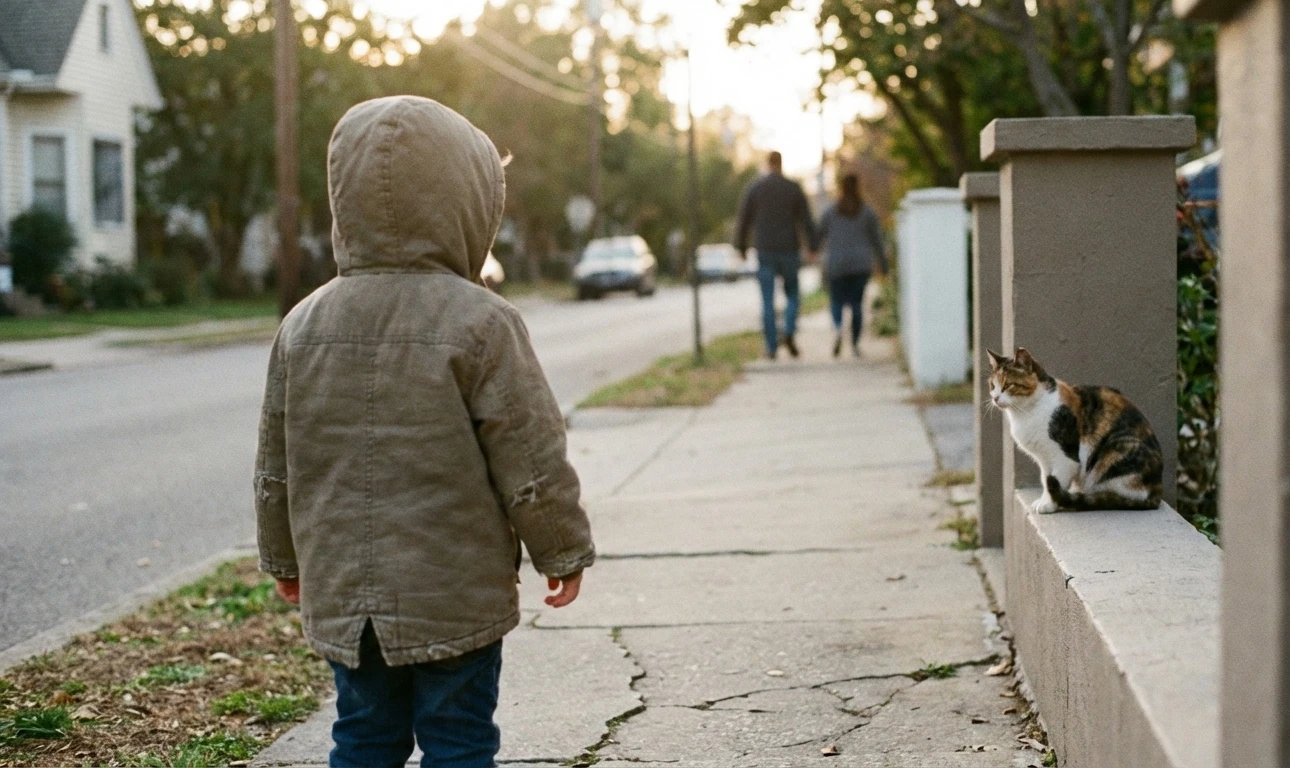
When a child sees a cat being kicked on the street and watches nobody react, this message gets silently engraved:
“The life of the weak is worthless.”
“Violence goes unpunished.”
“If nobody interferes, anything is allowed.”
Later, we are surprised when that same child shows no empathy. Years later, we complain: “Young people are so cruel.”
We teach children mathematics,teach them different languages,teach them coding. But we rarely teach them compassion. We rarely teach them respect. We rarely teach them to take another living being’s pain seriously.
And then we act confused when cruelty becomes normal.
Loving Animals Is a Moral Value, Not a Personal Hobby
Some people still treat animal love as a “preference” or a “hobby,” as if it were optional — like listening to music or playing sports.
No.
Caring for animals is a character indicator.
How a person treats an animal tells you more about their inner world than a thousand speeches ever could.
A family that fails to instil love for animals in a child cannot give that child a complete moral compass. Because conscience cannot develop without empathy. And without empathy, a healthy society cannot form.
How Families Shape Attitudes Toward Animals
Most people who abuse street animals do not wake up one morning and decide to harm a living being. That mindset is built slowly over years. And the first brick is often placed at home.
If you keep telling a child things like, “Stay away from dogs, they bite,” or “Cats are dirty, you’ll catch germs,” that child learns to see animals as something to fear or avoid. Over time, fear turns into distance, distance into indifference, and indifference into cruelty.
Families must accept this: not teaching a child to love animals is not neutral. It quietly creates space for harm.
Values are not taught with words. They are taught with examples.
Schools Fail to Teach Empathy and Living Being Rights
The education system has largely failed in this area.
We teach exam techniques. We teach memorisation. But we rarely teach empathy, responsibility toward nature, or respect for living beings.
If a country has no animal rights in its curriculum, no environmental awareness, and no empathy education, it is gambling with its future.
A person who never learns to respect another living being’s right to live will never fully internalise human rights either.
How Media Normalises Violence Against Street Animals
The role of the media here is far from innocent.
When animal abuse becomes news, it is either sensationalised or forgotten in two days. The perpetrator is either protected by hiding their name or excused with phrases like “They had psychological issues.”
No.
Most of these people are not “sick.” They are individuals who learned violence, normalised it, and were rewarded with impunity. Explaining everything through psychology is another way of erasing social responsibility.
The media also frames street animals as a “threat,” a “problem,” a “risk.” Bite incidents become headlines, while an animal starving for days, freezing in the cold, or being tortured becomes a minor footnote.
This language does not raise awareness. It polarises people. It turns animals into targets.
Why Municipalities and the State Are Responsible
The street animal issue is not something that can be dumped on individuals. This is a public responsibility.
Inadequate neutering programmes
Dysfunctional shelters
Uncontrolled practices
Non-transparent budgets
Administrations fighting volunteers instead of working with them
Failing to solve a problem for years and then making animals pay for it is both a moral and administrative scandal.
If street animal numbers are out of control in a city, the ones responsible are not the animals. They are the ones governing that city.
What Society Can Do to Reduce Violence Against Street Animals
There is no point in romantic language here. The facts are harsh enough.
First: do not stay silent when you see violence.
Second: report it and document it when possible.
Third: support local shelters and volunteer networks.
Fourth: teach children empathy through real-life examples.
Fifth: change everyday language about animals.
Real change rarely begins with outrage alone. It begins with small, consistent shifts in how communities report abuse, support local shelters, and normalise intervention instead of silence.
What Kind of Society Are We Creating for Our Children?
Let us ask an honest question.
What kind of society do we want our children to grow up in?
One where the strong crush the weak?
One where violence goes unpunished?
One where nobody cares about anyone else?
Or one built on compassion, responsibility, and solidarity?
The answer is directly connected to how we treat street animals.
This Is Not an Animal Issue — It Is a Human Crisis
This is not an animal article.
It is a human article.
Fighting violence against street animals is not a “good person hobby.” It is a moral line.
Either you stand with the weak.
Or you stand with the strong.
Either you stay silent.
Or you speak up.
There is no middle ground.
But real change does not come from despair alone. It comes from collective responsibility, sustained pressure on institutions, and everyday acts of care.
Because if what is being done to street animals continues without intervention, we will not just lose animals. We will lose something essential in ourselves.
And after that point, no law will be enough.
No punishment.
No regret.

For more reflections on everyday values, social responsibility, and the human side of ordinary life, you can browse the Lifestyle section.