
10 min read
Sci-fi movies that make you think are almost never the ones crowding those hundred-title rankings. You scroll through the list, every entry labeled a masterpiece, no real voice holding any of it together — and you close the tab with nothing. No film for tonight, no reason to trust the next recommendation.
What follows is the opposite. A small, deliberate selection of films chosen because they do something specific with an idea — ask a question the genre usually avoids, or answer a familiar one in a way that stays with you. I’ve watched all of them more than once, which matters: the sci-fi worth thinking about almost always shifts on a second viewing.
What actually makes a sci-fi film “make you think”
Before the list, a real definition — because this phrase gets thrown around until it means nothing.
A sci-fi film makes you think when its central idea can’t be resolved by the plot. You leave the theater with the question still open. Arrival doesn’t end when Louise makes her choice; it ends when you do. Ex Machina doesn’t end at the door. The door is where it starts for you.
That’s the difference between “smart sci-fi” and “thought-provoking sci-fi.” Smart sci-fi is internally consistent. Thought-provoking sci-fi is externally unresolved — it needs your life outside the movie to complete it.
This is also why spectacle-heavy sci-fi, even when excellent, rarely qualifies. Dune: Part Two is a staggering piece of filmmaking. But it resolves its questions within itself. You walk out full, not haunted. Both experiences are valid. This list is about the second one.
The films
1. The Substance (2024)
The most physical film on this list, and also the most conceptually ruthless. Coralie Fargeat won the Palme d’Or for Best Screenplay at Cannes for a reason — The Substance uses body horror the way the best sci-fi uses machines: as a literal device for an argument it refuses to make in words.
The premise sounds like a joke until you watch it. A fading television star injects a black-market serum that spawns a younger, better version of herself. They’re supposed to switch every seven days. The rule gets broken. Everything after that is the film asking a single question from ten different angles: what do you actually owe the version of yourself you used to be?
Demi Moore is doing the best work of her career here, and the fact that the film knew to cast her specifically — an actress whose own career arc gives the premise a second layer it couldn’t have bought any other way — tells you how carefully built this thing is. Margaret Qualley plays the younger self without a drop of softness. By the final act the film has earned every excess because it turns out the excess was the point.
What keeps it on this list rather than in the horror pile is how cleanly it functions as speculative fiction. Replace the serum with any other technology promising self-optimization and the film still holds. That’s the test. The Substance passes it with a grin.
Watch it if: You’ve ever looked in the mirror and felt two people disagreeing about what they saw.
2. After Yang (2021)
The quietest film on the list, and possibly the most underrated sci-fi of the last decade.
A family’s android companion breaks down, and a father spends the film trying to decide whether to repair him. That’s it. That’s the plot. What unfolds around that almost-nothing is a meditation on memory, care, and what it means to be present in a life that isn’t structured around productivity.
Kogonada shoots it like a Japanese garden — every frame has negative space the film trusts you to sit in. Most viewers check their phones within the first ten minutes. The ones who don’t get something American sci-fi almost never offers: a film about AI that isn’t afraid of being boring, because it knows it isn’t.
Watch it if: You’ve recently lost someone and haven’t been able to name what the loss actually changed.

3. Annihilation (2018)
The film that should have been bigger than it was.
Alex Garland’s follow-up to Ex Machina trades the tight chamber piece for something genuinely strange — an expedition into a zone where biology itself has become recursive. What makes it stick isn’t the body horror, although there’s plenty. It’s that the film treats self-destruction as a force of nature, not a psychological flaw.
The final thirty minutes abandon narrative in favor of choreography, and half the audience hates this. They’re wrong. The film has been telling you from the opening scene that the usual shape of a story can’t hold what it wants to show you.
Watch it if: You’ve ever wondered why people stay in things that are killing them.
4. Arrival (2016)
The obvious one, because it has to be. But let’s be clear about why.
Most first-contact films are about power — who wins, who survives, what the aliens want from us. Arrival isn’t. It’s about whether understanding another mind is even possible, and what happens to your sense of time when you start to succeed.
The reason the ending destroys people on first watch and rewires them on the second isn’t the twist. It’s that the film doesn’t treat grief as the cost of knowledge. It treats knowledge as grief. Once you see that reading, you can’t unsee it.
Watch it if: You’ve ever made a decision knowing exactly how it would end.
5. Ex Machina (2014)
The cleanest film on this list. Three characters, one house, one question that turns in on itself until you can’t tell which character is the experiment.
What elevates Ex Machina above the usual “can AI be conscious” debate is that it refuses to let you root for anyone cleanly. Nathan is a monster. Caleb is a fool. Ava is — well, that’s the question. The film isn’t asking whether she’s real. It’s asking whether “real” is the useful word here at all.
Watch Oscar Isaac’s final scenes twice. You’ll notice he’s already lost before he knows it, and the film has been telling you for an hour.
Watch it if: You think the Turing Test is an interesting thought experiment. You’ll leave thinking it was always the wrong test.
6. Under the Skin (2013)
This one I’ll warn you about. Jonathan Glazer’s film is less a movie than an experience you submit to. Scarlett Johansson plays an alien who doesn’t know she’s one, driving around Glasgow picking up men, and the film refuses to explain anything for about ninety minutes.
Most people bounce off it. That’s fine. But if you stay with it, something unusual happens: the film reveals itself to be about what it feels like to watch yourself become human — the exact moment consciousness starts noticing itself, and the terror that follows.
The score by Mica Levi is a character. The ending is not what you think it will be. This is the closest thing sci-fi has to a religious experience.
Watch it if: You want to be changed, not entertained.
7. Coherence (2013)
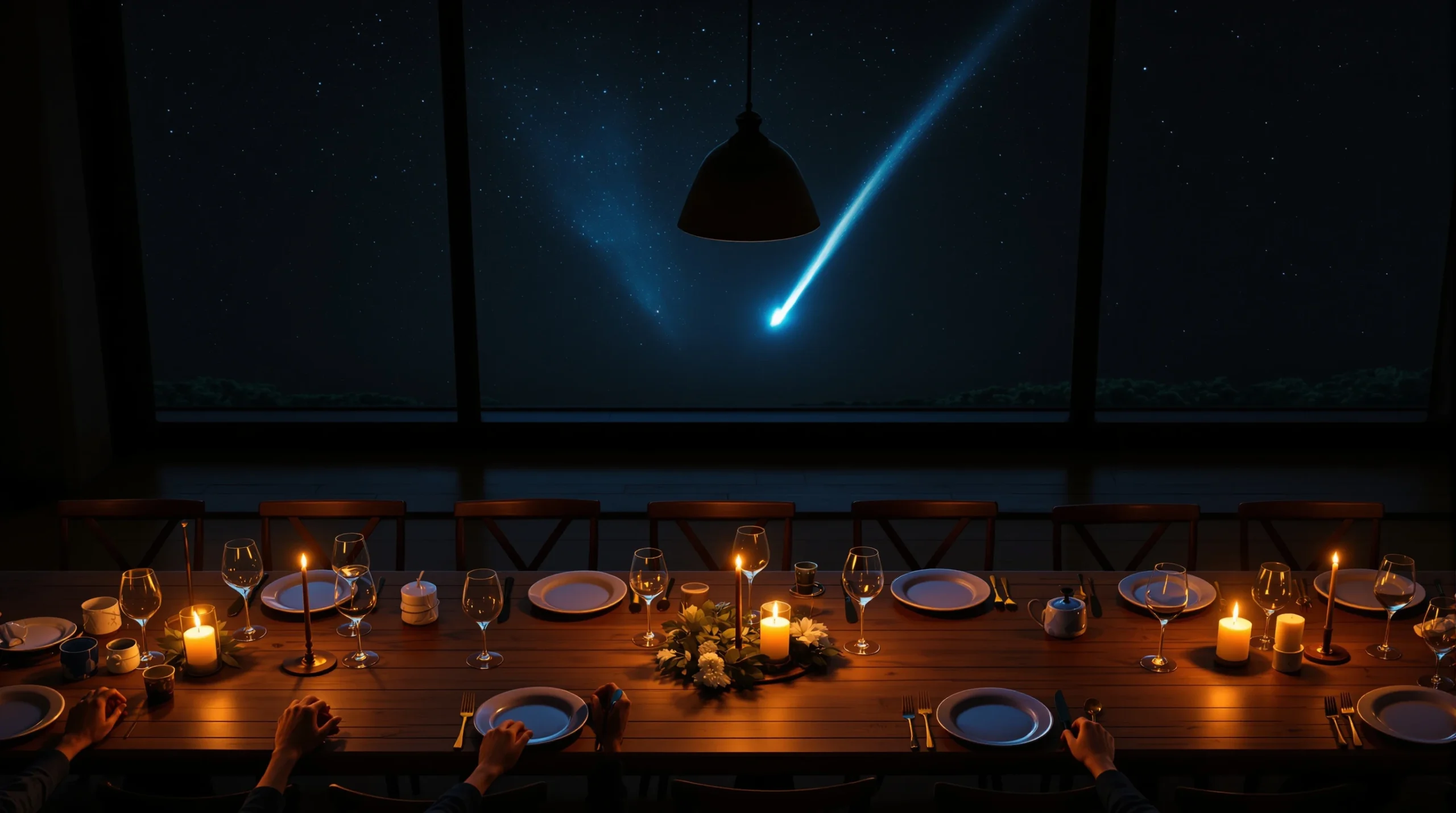
A dinner party. A comet. Then the lights go out.
This is the best ninety-dollar film you’ll ever see. Coherence uses the many-worlds interpretation of quantum mechanics not as a backdrop but as a social experiment. The central idea: what if you could meet the version of yourself from a slightly worse timeline? Would you know? Would you want to?
The film understands something most multiverse stories miss — the horror isn’t the doubles. The horror is realizing which version of yourself you actually are.
Watch it if: You liked Primer but wanted the dread without the math.
8. Primer (2004)
The hardest film to follow ever made on a budget of seven thousand dollars.
Primer is what happens when an engineer makes a time travel film and refuses to dumb it down. The plot collapses in on itself. You will not understand it on the first watch. You are not supposed to.
What the film actually explores — once you accept you’re going to need a whiteboard — is how two smart, normal men destroy their friendship not through greed but through the slow realization that they can no longer trust their own timelines. It’s a film about paranoia disguised as a film about time travel.
Watch it if: You want your sci-fi to respect your intelligence to the point of insult. Shane Carruth did not care whether you kept up.
9. Solaris (1972 or 2002 — pick one, not both)
The Tarkovsky original is the deeper film. The Soderbergh remake is the more accessible one. Both are asking the same question, and it’s the question this list has been circling the whole time:
What do you do when the thing you love most comes back to you, and you know it shouldn’t have?
Solaris is the film that earned sci-fi the right to be taken seriously as literature. Watch the 1972 version if you want to wrestle. Watch the 2002 version if you want to weep. Don’t watch both back to back — it’s overwhelming in a way that doesn’t deepen the experience.
Watch it if: Grief has ever felt to you like a second person in the room.
10. Stalker (1979)
The oldest film here, and the one that will change what you think sci-fi can do.
Tarkovsky’s adaptation of the Strugatsky brothers’ novel follows three men into a restricted area called “The Zone,” where a room supposedly grants your deepest wish. They never reach it, in the way you expect.
What you have to understand about Stalker is that it’s paced like a pilgrimage. Scenes last. Conversations drift. You will want to skip forward, and if you do, the film will punish you by becoming unintelligible. Watched correctly, it’s one of the most spiritually heavy pieces of cinema ever made.
Every sci-fi film about “be careful what you wish for” since 1979 is a footnote to this.
Watch it if: You’re ready to stop treating the genre as entertainment.
Stalker is freely available in full on Mosfilm’s official YouTube channel — one of the rare cases where cinema this heavy is also cinema this accessible.
Why this list deliberately skips certain “thinking” classics
A few omissions, because honesty matters here.
Blade Runner and Blade Runner 2049 are not on this list. They’re great films. But their central questions — what makes us human, what is a soul — have been absorbed into culture so thoroughly that watching them now feels more like revisiting a reference than engaging with an open question. They’ve earned their status. They no longer provoke.
Interstellar isn’t here either. It’s a spectacular film, and Nolan deserves every award he gets. But Interstellar resolves. The love-transcends-dimensions finale tidies its own mystery. That’s not a flaw. It’s just a different project than the one this list is about.
Inception, similarly, is a puzzle box. Puzzle boxes are not the same as unresolved questions. Once you solve the top, there’s nothing left to think about. The films on this list don’t have a top to solve.
How to actually watch these
A small piece of advice, because the films on this list punish distracted viewing more than most.
Put the phone in another room. Not face-down on the couch. Another room. These are films that use silence as argument, and silence is the first thing a notification kills.
Watch one per week, not three in a weekend. Annihilation and Under the Skin on the same Saturday will give you a headache that lasts until Tuesday. These films need breathing room around them, because the thinking they provoke happens after the credits, not during.
And don’t read the Wikipedia plot summary first. The whole point of thought-provoking sci-fi is that the plot is the least interesting thing about it. Skip ahead and you’ll flatten the experience into the thing these films are built to resist.
If you find that a ninety-minute film isn’t the shape your attention wants right now — that you’d rather sink into an idea across ten hours instead of two — then television is the better medium for that mood, and we’ve mapped out the strongest current options in our modern sci-fi series list. Different pacing, same kind of question.
The thread running through all of them
If you’ve read this far, you’ve probably noticed the pattern. Every film on this list is, at its core, about the limits of knowing — knowing other minds, knowing yourself, knowing time, knowing grief. Sci-fi is the genre best equipped to ask these questions because it can literalize them. An alien language becomes a philosophical problem you can actually hear. A recursive biology becomes a grief you can actually see.
The genre’s worst reputation is that it’s about the future. Its best reputation is that it’s about the parts of the present we don’t have other words for.
All films are linked on IMDb — search by title if you want cast, runtime, or where to stream.
Watch these, in any order. Come back and tell me which one broke you open.
If you liked this list, you’ll probably also like:
- The best sci-fi and fantasy movies of 2024 and 2025 — a broader map of the last two years, including the titles that set up where the genre is heading now
- Modern sci-fi series list — when a two-hour film isn’t enough space for the idea, this is where the genre is doing its most patient thinking