10 min read
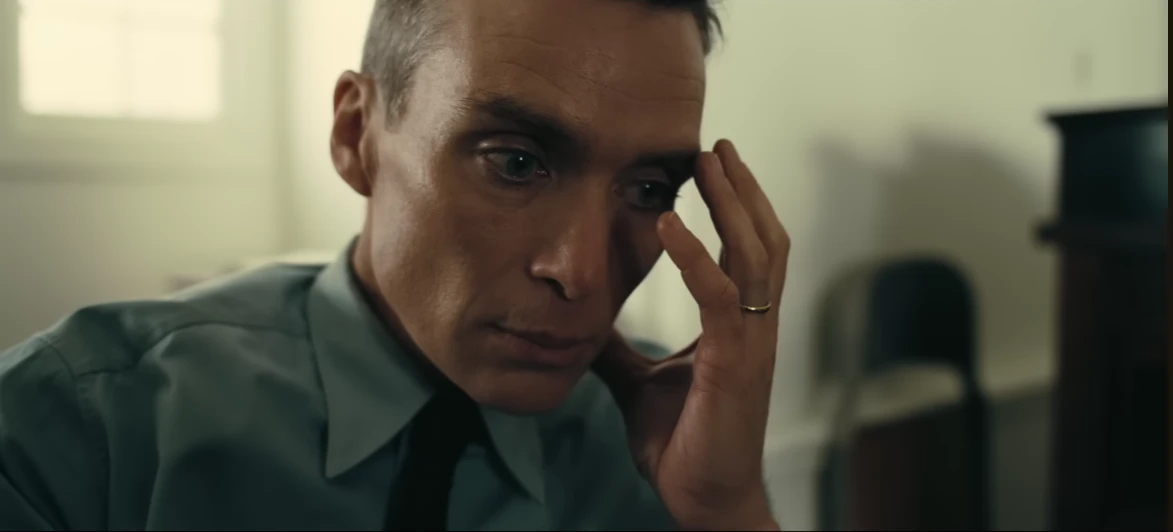
Movies like Oppenheimer do not come along every year. Christopher Nolan’s 2023 film earned $975 million at the box office, won seven Academy Awards, and landed an 8.2 on IMDb with well over a million votes. It was the most Googled movie of 2023. Those numbers tell one story. The real story is what happened after the credits rolled. Millions of people sitting in the dark, unsure whether they had just watched a hero’s tragedy or a villain’s origin story, unable to stop thinking about the difference.
Oppenheimer works because it refuses to simplify. It holds both versions of its subject in the frame at the same time and never chooses between them. The security hearing structure gives the film an engine that never stops running, and Cillian Murphy’s performance operates on a frequency most actors never find. If you gravitate toward thriller movies you cannot stop thinking about, you already know how rare that kind of sustained tension is.
You are here because you want that feeling again. Not necessarily the subject matter. You are looking for the architecture. Pressure built through accumulation rather than explosion. Moral weight that does not lift when you leave the room. The sense that you probably missed at least one layer, and that returning to it would reveal something entirely new.
These five films deliver that. They span science fiction, investigative journalism, war, thriller, and chamber drama. Each one shares something structural with Oppenheimer. A brilliant mind confronting consequences, inside a system designed to exploit those consequences for its own purposes. They are all from the last decade, all critically acclaimed, and all available on major streaming platforms.
Arrival (2016) — Knowledge as a Burden You Cannot Put Down
Director: Denis Villeneuve | IMDb: 7.9 | RT Critics: 94% | Box Office: $203M worldwide | Oscar-nominated for Best Picture
Denis Villeneuve directed Arrival seven years before Dune made him a household name, and it remains his most precise film. Amy Adams plays linguist Louise Banks, recruited by the military to communicate with extraterrestrial visitors who have appeared at twelve locations around the world. No alien battles. No weapon countdowns. Just a woman standing in front of a glass wall, trying to decode a circular language while men in uniforms pace behind her demanding faster results. If you appreciate sci-fi movies that make you think, this is the genre at its ceiling.
The Oppenheimer parallel cuts deep. Louise possesses knowledge her government needs but cannot understand. She is brought inside a military operation as a specialist they cannot replace but also cannot control. She discovers something that changes her understanding of reality itself, and she must decide what to do with it knowing the personal cost will be enormous and the institution will never acknowledge it.
Where the film becomes devastating is in its quieter moments. Louise processing what she has learned while standing alone in her house. The gap between what she knows and what she can say to anyone. That gap is the same one Oppenheimer inhabits after Trinity. The difference is that Louise chooses to carry her knowledge forward. Oppenheimer tries to set his down and the world will not let him. The film’s central twist reframes everything you have watched and transforms a science fiction film into something far more intimate and personal than anything the genre usually attempts.
Killers of the Flower Moon (2023) — The Same Year, the Same American Question
Director: Martin Scorsese | IMDb: 7.6 | RT Critics: 93% | Box Office: $157M worldwide | 10 Oscar nominations
Oppenheimer and Killers of the Flower Moon arrived within three months of each other in 2023. Together they form the sharpest examination of American power any single year of cinema has produced. Where Nolan asks what happens when the state decides a city of civilians is acceptable collateral for ending a war, Scorsese asks what happens when a community of Native Americans is acceptable collateral for accessing their oil.
The film works through a different mechanism than Oppenheimer. There is no security hearing, no institutional tribunal. Instead there is a marriage. Leonardo DiCaprio’s Ernest Burkhart genuinely loves Mollie Kyle, an Osage woman, and simultaneously participates in the murder of her family at the direction of his uncle William Hale. The film refuses to resolve that contradiction. It simply presents a man who is weak enough to hold love and complicity in the same hand without breaking apart. Among the best drama movies of recent years, almost nothing matches this level of moral discomfort.
What makes it land so hard is the structural echo. Oppenheimer is recruited by Groves, who frames mass destruction as patriotic duty. Burkhart is recruited by Hale, who frames murder as family loyalty. Both systems are designed to make participation feel inevitable rather than chosen. The mechanisms are identical. Only the scale changes.
Scorsese’s final scene does something Nolan never attempts. It turns the camera on the audience and asks whether the act of watching this story is itself a form of consumption. It is the bravest ending in modern American cinema, and it reframes the entire three and a half hours that came before it.
Spotlight (2015) — Patience as a Weapon
Director: Tom McCarthy | IMDb: 8.1 | RT Critics: 97% | Academy Awards: Best Picture, Best Original Screenplay
Spotlight is the film nobody connects to Oppenheimer, and it is the closest structural match on this list. One is about the atomic bomb. The other is about a newspaper investigation into child abuse by Catholic priests in Boston. The subject matter could not be more different. The architecture is almost identical.
Both films build tension entirely through the accumulation of information. No violence, no spectacle. Reporters doing their jobs with unusual thoroughness, and the film trusts that thoroughness to generate its own power. When Mark Ruffalo finally breaks composure in a thirty-second outburst, it hits like a detonation because the film earned it through two hours of restraint. The way it handles real events puts it alongside the best documentaries about hidden realities in terms of sheer impact.
But Spotlight diverges from Oppenheimer in one critical way. Nolan’s film is ultimately about one man against an institution. Spotlight is about an institution against itself. The Boston Globe is part of the same city power structure that enabled the cover-up. The investigation is an institution turning its tools on its own complicity. That dimension makes it more uncomfortable than Oppenheimer in ways that are easy to miss on first viewing.
The government that funded Oppenheimer turned on him when he became inconvenient. The Church that employed these priests chose its own survival over the victims. Same logic, different rooms.
Ex Machina (2015) — Playing God and Losing
Director: Alex Garland | IMDb: 7.7 | RT Critics: 92% | Box Office: $36.9M worldwide | Oscar for Best Visual Effects
Ex Machina asks Oppenheimer’s central question in the most compressed form possible. Three characters, one location, ninety minutes. What happens when someone builds something they cannot control.
Oscar Isaac’s Nathan is Oppenheimer stripped of conscience. Brilliant, charismatic, alcoholic, completely convinced his creation is the most important achievement in human history. When his AI begins behaving in ways he did not design, his response is not curiosity. It is control. That instinct is exactly what drives Oppenheimer’s second act. The bomb develops its own momentum and the man who built it discovers he has no authority over what comes next. If you have explored the best sci-fi fantasy films of recent years, Ex Machina occupies a tier most of them cannot reach.
Where the film becomes genuinely unsettling is Alicia Vikander’s Ava. The film never tells you how much of her behavior is authentic and how much is strategic performance. That ambiguity is the same question hovering over Oppenheimer himself. How much of his public anguish was real reckoning, and how much was a brilliant man performing the role the moment required. Neither film answers. That is the point.
Nathan’s facility is built into a Norwegian mountainside. It looks like a luxury retreat. It functions as a prison. That duality is Los Alamos in miniature. A place of extraordinary intellectual achievement that was also, by design, a sealed compound where every conversation was monitored and every letter was read before it left.
1917 (2019) — The View From Inside the Decision
Director: Sam Mendes | IMDb: 8.2 | RT Critics: 88% | Box Office: $384.6M worldwide | 3 Academy Awards
If Oppenheimer is the room where war gets planned, 1917 is the trench where the plan lands.
Two British soldiers are ordered to cross no-man’s land with a message that will save sixteen hundred lives. They did not design the strategy. They did not choose the mission. They are instruments of someone else’s calculation, carrying the weight of a decision made at a desk by someone who will never see the ground they are crossing. Sam Mendes never lets you forget that. For anyone who values action adventure movies worth watching, 1917 operates on a frequency where spectacle and human cost are completely inseparable.
The one-shot conceit matters not as a technical achievement but as an experience. You cannot look away. You cannot cut to a wider frame or a calmer scene. You are locked inside the same momentum as these soldiers, the same relentless forward motion with no option to pause or step back. That claustrophobia mirrors what Oppenheimer feels during the hearing scenes. Both men are trapped inside something they cannot stop or leave.
Roger Deakins shot the most devastating sequence in the film. A bombed French town lit entirely by flares, Schofield running through ruins while orange light pulses above him. It captures something Oppenheimer reaches for in the Trinity sequence. Destruction and beauty existing in the same frame without canceling each other out. The mushroom cloud is gorgeous. The firestorms are gorgeous. 1917 holds that duality without flinching and without commentary.
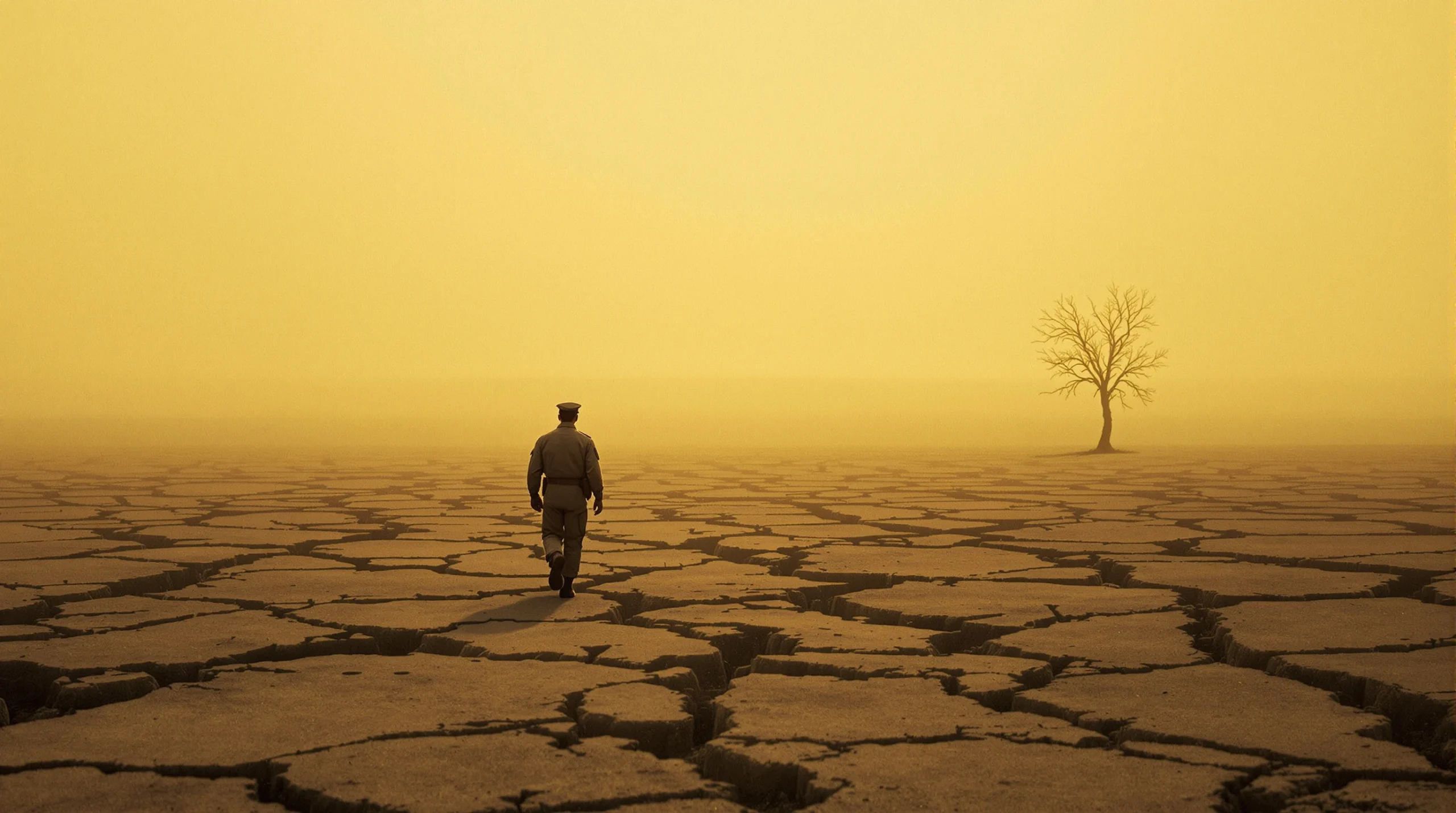
George MacKay carries the film’s weight physically. Exhaustion deepening in his face scene by scene, silence becoming his default language. It is the same register as Murphy’s Oppenheimer in the final third. Both men have been permanently altered by what they have witnessed. The difference is time. Oppenheimer will spend decades failing to articulate it. Schofield does not have decades. He has a field, a fence, and a tree.
Why These Five Movies Like Oppenheimer Work Together
Every recommendation list for movies like Oppenheimer makes the same mistake. They match on subject. Other scientist biopics. Other World War II films. Other Nolan projects. That misses what actually stays with people.
Oppenheimer endures because of three things. The relationship between a gifted individual and the institution that uses them. The moral weight of knowledge you cannot unlearn. And the refusal to tell the audience what to think. If you are interested in how genre shapes this kind of storytelling, the genre deep dive framework offers a useful lens for examining it.
Arrival is about bearing the cost of discovery. Killers of the Flower Moon is about systems designed to make violence feel natural. Spotlight is about an institution confronting its own rot. Ex Machina is about a creator rendered irrelevant by his creation. 1917 is about the human beings at the receiving end of every decision made in every room like the ones Oppenheimer sat in.
Five films. Five genres. One conviction. The most dangerous thing in the world is not a weapon or a secret. It is the distance between what someone knows and what they are willing to do about it. That distance is where Oppenheimer lives, and it is what you are actually searching for.
Quick Reference
| Film | Year | Director | IMDb | RT Score | The Oppenheimer Connection |
|---|---|---|---|---|---|
| Arrival | 2016 | Denis Villeneuve | 7.9 | 94% (Critics) | Specialist recruited by the military, discovers knowledge with unbearable personal cost |
| Killers of the Flower Moon | 2023 | Martin Scorsese | 7.6 | 93% (Critics) | Institutional structures enabling ordinary people to participate in violence |
| Spotlight | 2015 | Tom McCarthy | 8.1 | 97% (Critics) | Methodical revelation of institutional cover-up, tension through accumulation |
| Ex Machina | 2015 | Alex Garland | 7.7 | 92% (Critics) | Creator builds something that exceeds their ability to control it |
| 1917 | 2019 | Sam Mendes | 8.2 | 88% (Critics) | The human cost at the end of the chain of command |