

8 min read
If you want to start an ecommerce business from scratch, the path sounds deceptively simple — pick a product, build a store, run some ads. But the reality is far less forgiving. Roughly 80% of ecommerce stores fail, and most of them collapse not because the idea was bad, but because the execution skipped steps that actually matter. This guide walks you through every stage of building an online store that has a real chance of surviving — and growing — past year one.
There’s no motivational fluff here. No “follow your passion and the money will come.” What follows is a clear, grounded breakdown of how ecommerce actually works in 2026, what it costs, where most beginners trip, and how to avoid the expensive lessons that knock out the majority.
Pick a Business Model Before You Pick a Product
Most beginners jump straight to product hunting. That’s backwards. The business model you choose determines your margins, your risk level, your startup budget, and how much control you have over the customer experience.
Here’s what each model actually looks like in practice:
| Model | Startup Cost | Typical Margins | Control Over Quality | Best For |
|---|---|---|---|---|
| Dropshipping | Under $500 | 10–20% | Very low | Testing ideas fast with minimal risk |
| Print-on-Demand | Under $300 | 20–40% | Medium | Creators and niche brand builders |
| Wholesale / Reselling | $2,000–$10,000 | 30–50% | Medium | People with capital who want proven products |
| Private Label / D2C | $3,000–$15,000+ | 40–70% | High | Brands building long-term equity |
| Digital Products | Under $200 | 80–95% | Full | Experts, educators, designers |
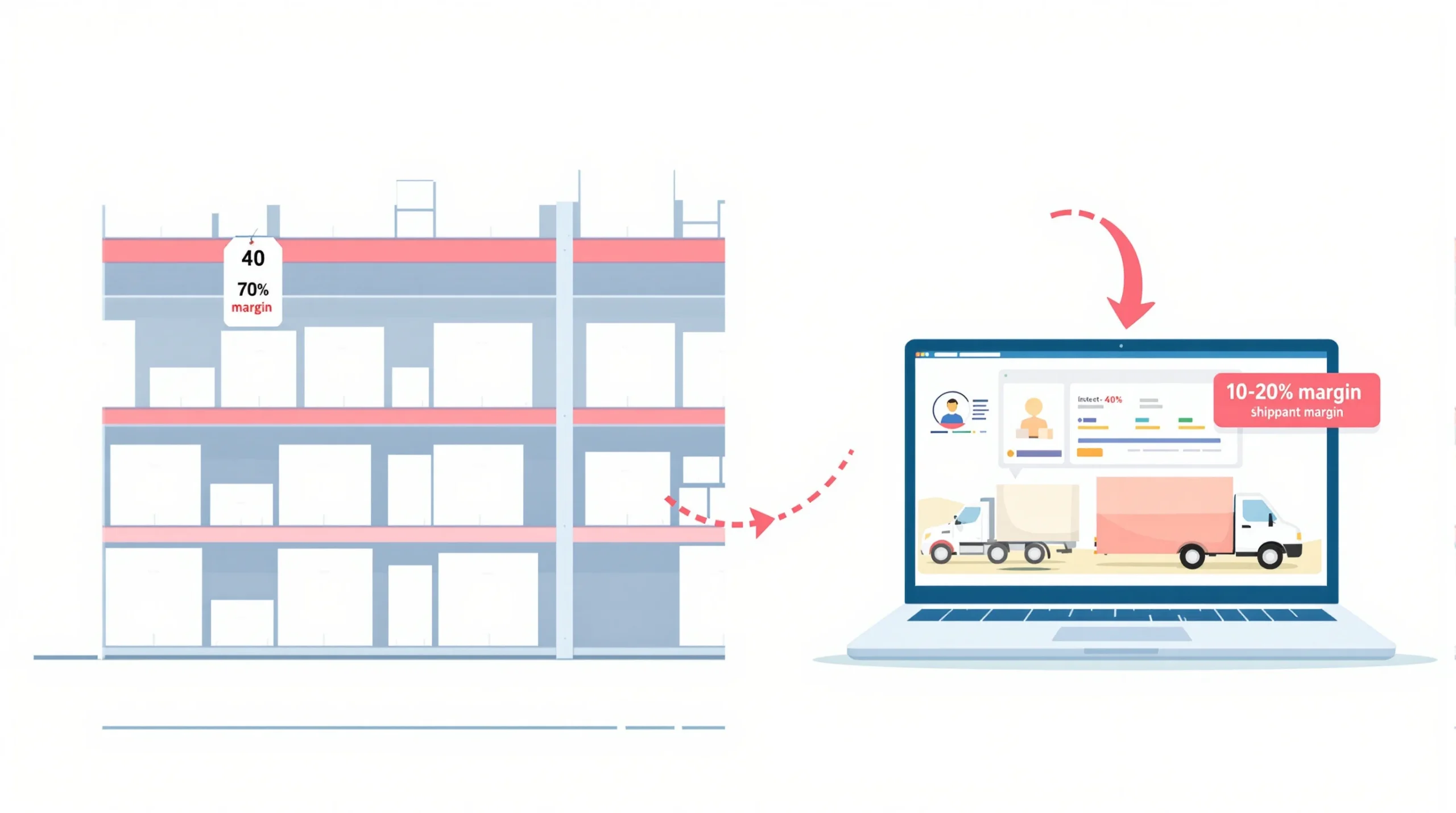
Dropshipping gets the most attention online, but the numbers tell a different story. Only 10–20% of dropshipping stores turn a profit in their first year. The margins are thin, you can’t control shipping speed or product quality, and the barrier to entry is so low that competition is brutal.
D2C (direct-to-consumer), on the other hand, reached $212.9 billion in US sales in 2025 — a 16.6% jump from the year before. The margins are better, the brand equity is real, and you actually own the relationship with your customer.
That doesn’t mean dropshipping is useless. It’s a legitimate way to test demand before committing capital. But if your entire business strategy is built around it, you’re building on sand.
Find a Product That People Actually Want
This is where most ecommerce businesses die quietly — not from a lack of effort, but from a lack of demand. The number one reason online stores fail is lack of product-market fit. Founders fall in love with a product nobody is searching for.
Here’s a practical process that works:
Start with search demand, not personal interest. Use Google Trends to check whether interest in your product category is growing, stable, or dying. A product with a flat or rising trend line has legs. A product spiking and crashing is a fad.
Validate with keyword tools. Free tools like Google Keyword Planner or Ubersuggest show you how many people search for your product every month. If your core product keyword has fewer than 500 monthly searches, the ceiling is low. If it has 50,000+ and you’re a brand-new store, the competition will bury you. The sweet spot for beginners sits between 1,000 and 10,000 monthly searches with moderate competition.
Check the competition on page one. Search your product keyword on Google. If the first page is dominated by Amazon, Walmart, and Target, that’s a signal to niche down. Instead of “yoga mats,” think “extra thick yoga mats for bad knees.” Long-tail keywords convert 2.5x better than broad terms and they’re significantly easier to rank for.
Look for problems, not products. The best-selling ecommerce products solve a specific pain point. A product that removes a frustration — saves time, reduces discomfort, simplifies a task — sells itself in ways that trendy gadgets never will.
Choose the Right Platform for Your Stage
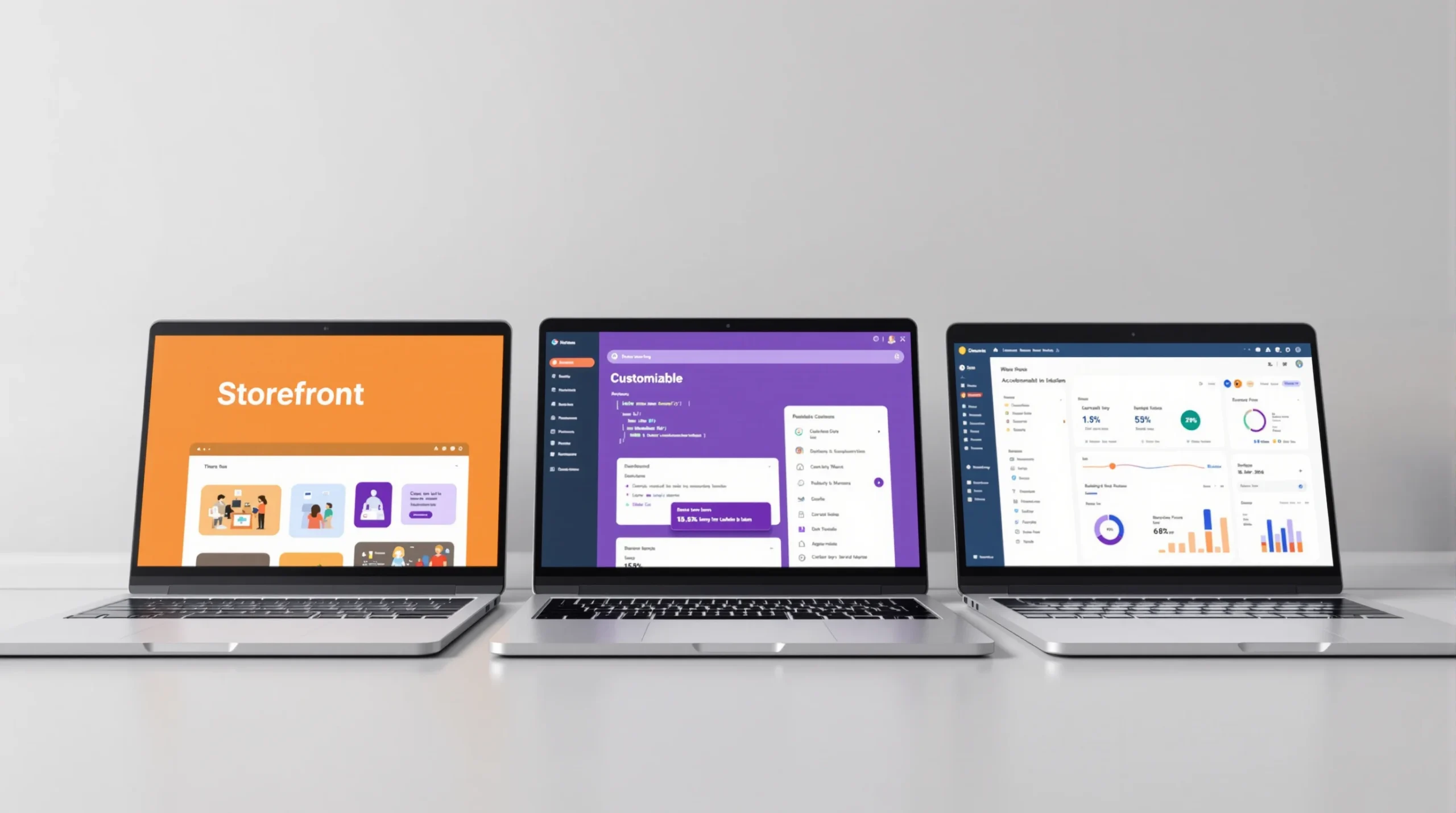
Platform choice matters, but not as much as the internet wants you to believe. You don’t need to spend three weeks comparing features. You need to launch.
Shopify is the default for most new stores, and for good reason. It powers 12% of all US commerce. Plans start at $29/month. The ecosystem of apps, themes, and integrations is unmatched. If you want the shortest path from idea to first sale, this is it.
WooCommerce is free and open-source, but that zero-dollar price tag is misleading. You’ll need hosting ($5–$30/month), a premium theme ($50–$200), and likely several paid plugins for essential features. The total cost of a properly built WooCommerce store frequently exceeds what people expect. It’s a strong choice if you’re already comfortable with WordPress and want full customization control.
BigCommerce sits between the two. No transaction fees on any plan, strong native features, and built-in structured data for better search visibility. It’s particularly solid for stores planning to scale into B2B or multi-channel selling.
Here’s the honest take: if you’re reading a guide called “how to start an ecommerce business,” you should probably start with Shopify. Get to revenue first. You can always migrate later when your needs outgrow the platform — and by that point, you’ll know exactly what features matter to you because you’ll have learned from actual sales, not hypothetical scenarios.
Understand the Real Costs Before You Commit
Ecommerce startup costs range from almost nothing to five figures, depending on your model. But the costs most beginners overlook aren’t the obvious ones.
The costs everyone budgets for:
- Platform subscription: $29–$79/month
- Domain name: $10–$15/year
- Theme or template: $0–$200
The costs most beginners forget:
- Product samples and testing: $50–$300
- Product photography: $0–$500 (DIY vs. professional)
- Shipping supplies and packaging: $50–$200
- Business insurance: $300–$800/year
- Accounting software: $0–$30/month
- Initial marketing budget: $500–$1,500/month
That last item — marketing — is the one that sinks the most stores. According to Shopify’s own data, most new store owners spend $500 to $1,000 per month on marketing. If your margins are 20% on a $30 product, you need to sell 83–167 units per month just to cover your ad spend. Before product costs.
The math needs to work on paper before you spend a dollar on ads. This sounds obvious, but the graveyard of failed ecommerce stores is full of founders who skipped this step.
Build Your Store Like a Customer, Not a Designer
Your store doesn’t need to be beautiful. It needs to be clear, fast, and trustworthy.
Speed is non-negotiable. Sites loading in one second convert at 3.05%, while four-second sites convert at just 0.67%. That’s not a small difference — it’s a 4.5x gap. Compress your images, choose a lightweight theme, and skip the fancy animations.
Mobile-first is the only option. 75% of ecommerce traffic comes from mobile devices. If your store looks great on desktop but clunky on a phone, you’re ignoring three out of four visitors. Test every page on a real phone, not just a browser preview.
Product pages do the selling. Generic descriptions copied from your supplier’s website won’t cut it. Your product pages need original descriptions that explain what the product does, who it’s for, and why it matters. Include multiple high-quality images from different angles. Add size charts, material specs, and shipping timelines. Blurry photos and thin descriptions are conversion killers.
Trust signals matter more than aesthetics. SSL certificate (essential), clear return policy, visible contact information, customer reviews if you have them, and recognizable payment badges. New stores have zero brand recognition, so every element that says “this is a real, legitimate business” moves the needle.
Get Your First Customers Without Burning Cash
The first sale is the hardest. And the instinct to throw money at Facebook ads from day one is understandable but usually premature.
In a November 2025 survey of Shopify merchants, word of mouth (53%) and organic social media (35%) were the most common year-one growth strategies. Paid advertising ranked highest only among merchants already earning over $1 million. Small stores that went heavy on ads early often burned through their budget before understanding what actually converts.
A smarter sequence looks like this:
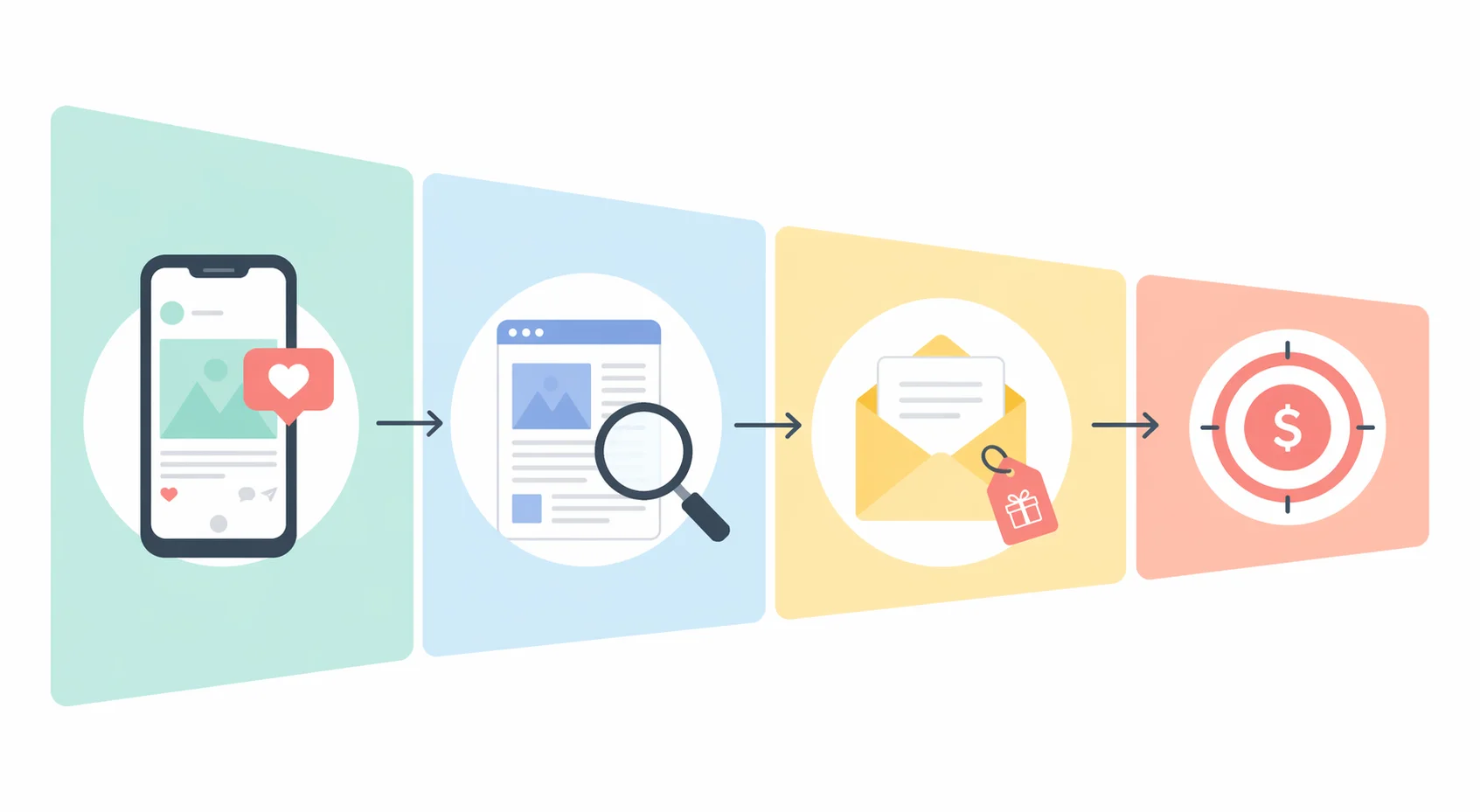
- Organic social media first. Build a presence on one or two platforms where your target audience actually spends time. Instagram for visual products, TikTok for trend-driven or novelty items, Pinterest for home and lifestyle. Post consistently. Show the product in context, not on a white background.
- Content and SEO second. Blog content built around questions your customers actually search for brings free, compounding traffic over time. If you understand how online shopping is changing and where consumer behavior is heading, you can create content that meets people exactly where they are in their buying journey.
- Email collection from day one. Offer something in exchange for an email address — a discount code, a free guide, early access. Email and SMS deliver the highest ROI of any channel for ecommerce. Build the list before you need it.
- Small-budget paid ads last. Once you know which products convert, which messaging resonates, and what your customer acquisition cost is, then scale with paid advertising. Not before.
The highest-performing ecommerce brands in 2026 aren’t spreading themselves across every channel. They’re doubling down on 2–3 core channels and doing them well. Channel overload is a rookie trap.
Avoid the Mistakes That Kill Most Stores

Knowing what works is useful. Knowing what destroys businesses is more useful. Here are the patterns that show up repeatedly in ecommerce failure data:
Ignoring unit economics. When the cost to acquire a customer exceeds their lifetime value, the business bleeds money even while sales grow. Track your customer acquisition cost (CAC) from the first month. If you can’t get a customer for less than your profit per order, your model is broken — and no amount of marketing will fix it.
Obsessing over first-time sales, neglecting retention. Many stores pour everything into acquisition and ignore the customers they already have. Repeat customers cost far less to convert and spend more per order. If you’re not emailing past buyers, you’re leaving the easiest revenue on the table.
Skipping SEO entirely. Organic search is the only channel that compounds over time. Paid ads stop the moment you stop paying. Social media reach depends on algorithms you don’t control. But a well-optimized product page or blog post can bring traffic for years. Schema markup, keyword-optimized descriptions, and clean site architecture aren’t optional — they’re foundational.
Launching with too many products. Start with 5–15 products, not 500. A focused catalog is easier to market, easier to manage, and gives you clearer data on what resonates. You can always expand once you know what sells.
Underestimating shipping complexity. Shipping costs, delivery times, and return logistics can make or break your margins. Figure this out before launch, not after your first wave of refund requests.
How to Actually Start an Ecommerce Business from Scratch and Survive
The ecommerce failure rate is high, but it’s not random. The stores that survive their first year tend to share a few things in common, and none of them are glamorous.
They launched fast and imperfect rather than spending months perfecting a logo. They tracked their numbers weekly — traffic, conversion rate, average order value, customer acquisition cost — and made decisions based on data, not feelings. They picked one or two marketing channels and committed instead of chasing every new trend. They treated their first 100 customers like gold, because word of mouth from real buyers is worth more than any ad campaign.
The global ecommerce market hit $6.7 trillion in 2025 and is projected to reach nearly $8 trillion by 2027. The opportunity is enormous. But opportunity without execution is just a nice statistic.
The best time to start was probably last year. The second best time is right now — with clear eyes, a working spreadsheet, and zero illusions about what it actually takes.