

13 min read
If you want to start a waffle business, the first thing you need to understand is that the internet is full of vague advice dressed up as guidance. Most articles throw around phrases like “create a business plan” and “find your niche” without ever telling you what a single waffle actually costs to produce, what equipment you genuinely need, or how long it takes before you stop bleeding money. This guide is different. Every number here is real. Every step is actionable. And every section exists because someone who actually launched a waffle operation needed to know it.
Waffles sit in a rare sweet spot in the food industry. The ingredient cost per unit is remarkably low — roughly $0.60 to $0.80 for a single waffle made from scratch — while the selling price ranges from $4 to $8 depending on toppings and location. That gap is where the entire business lives. But getting there involves decisions that most first-time food entrepreneurs underestimate.
Let’s walk through every single one of them.
Pick a Business Model That Matches Your Budget
Not every waffle business looks the same, and the model you choose determines almost everything — your startup cost, your daily stress level, and your ceiling for growth. Here’s how the main options stack up against each other:
| Business Model | Startup Cost | Monthly Overhead | Scalability | Best For |
|---|---|---|---|---|
| Home-based / Ghost kitchen | $3,000 – $15,000 | $500 – $1,500 | Moderate | Testing the market with minimal risk |
| Food cart or pop-up stall | $5,000 – $25,000 | $800 – $2,000 | Moderate | Events, farmers’ markets, festivals |
| Mall kiosk or indoor stand | $15,000 – $50,000 | $2,000 – $5,000 | High | High-traffic retail environments |
| Full storefront / café | $50,000 – $200,000 | $5,000 – $15,000 | Very high | Building a brand with dine-in experience |
| Franchise | $150,000 – $500,000+ | $8,000 – $20,000 | Very high | Leveraging an existing brand name |
The home-based model deserves a closer look if you’re starting with limited capital. Delivery platforms like Uber Eats, DoorDash, and Grubhub have made it entirely possible to run a profitable waffle operation from a residential kitchen — provided you meet your local health department’s requirements. In most regions, this means registering as a food business, passing a kitchen inspection, and obtaining a food handler’s permit.
A food cart is the next logical step. You skip the rent entirely, position yourself at high-traffic events, and test multiple locations before committing to one. The trade-off is weather dependency and the physical toll of setup and teardown.
If you’re eyeing a full storefront, be honest about your runway. You’ll need 6 to 12 months of operating capital set aside before you open the doors. The rent alone will consume 15–25% of your revenue in most urban areas. The U.S. Small Business Administration offers a solid framework for structuring your business plan and estimating startup costs — worth reviewing before you commit to any model.
Understand What It Actually Costs to Make a Waffle
This is where most guides fall short. They talk about “ingredients” as a category without breaking down what that means in practice. Here’s a real cost breakdown for a basic Belgian waffle (one serving):
| Ingredient | Amount per Waffle | Cost |
|---|---|---|
| All-purpose flour | 60g | $0.06 |
| Butter | 25g | $0.12 |
| Sugar | 15g | $0.02 |
| Eggs | 1 medium | $0.15 |
| Milk | 60ml | $0.05 |
| Baking powder | 3g | $0.01 |
| Vanilla extract | 2ml | $0.08 |
| Salt | Pinch | $0.01 |
| Total base cost | $0.50 |
Add toppings and the picture shifts:
| Topping Tier | Examples | Added Cost | Suggested Retail Markup |
|---|---|---|---|
| Basic | Powdered sugar, syrup, butter | $0.10 – $0.20 | Sell at $4.00 – $5.00 |
| Mid-range | Fresh berries, whipped cream, Nutella | $0.40 – $0.80 | Sell at $5.50 – $7.00 |
| Premium | Ice cream, caramelized banana, salted caramel sauce | $0.80 – $1.50 | Sell at $7.00 – $9.00 |
The math is compelling. Even with premium toppings, your cost of goods rarely exceeds $2.00 per waffle. At a $7.00 selling price, that’s a gross margin above 70%. For context, the average restaurant profit margin sits between 3–5% net — a waffle-focused operation with tight cost control can comfortably outperform that range.
Get the Right Equipment (Without Overspending)
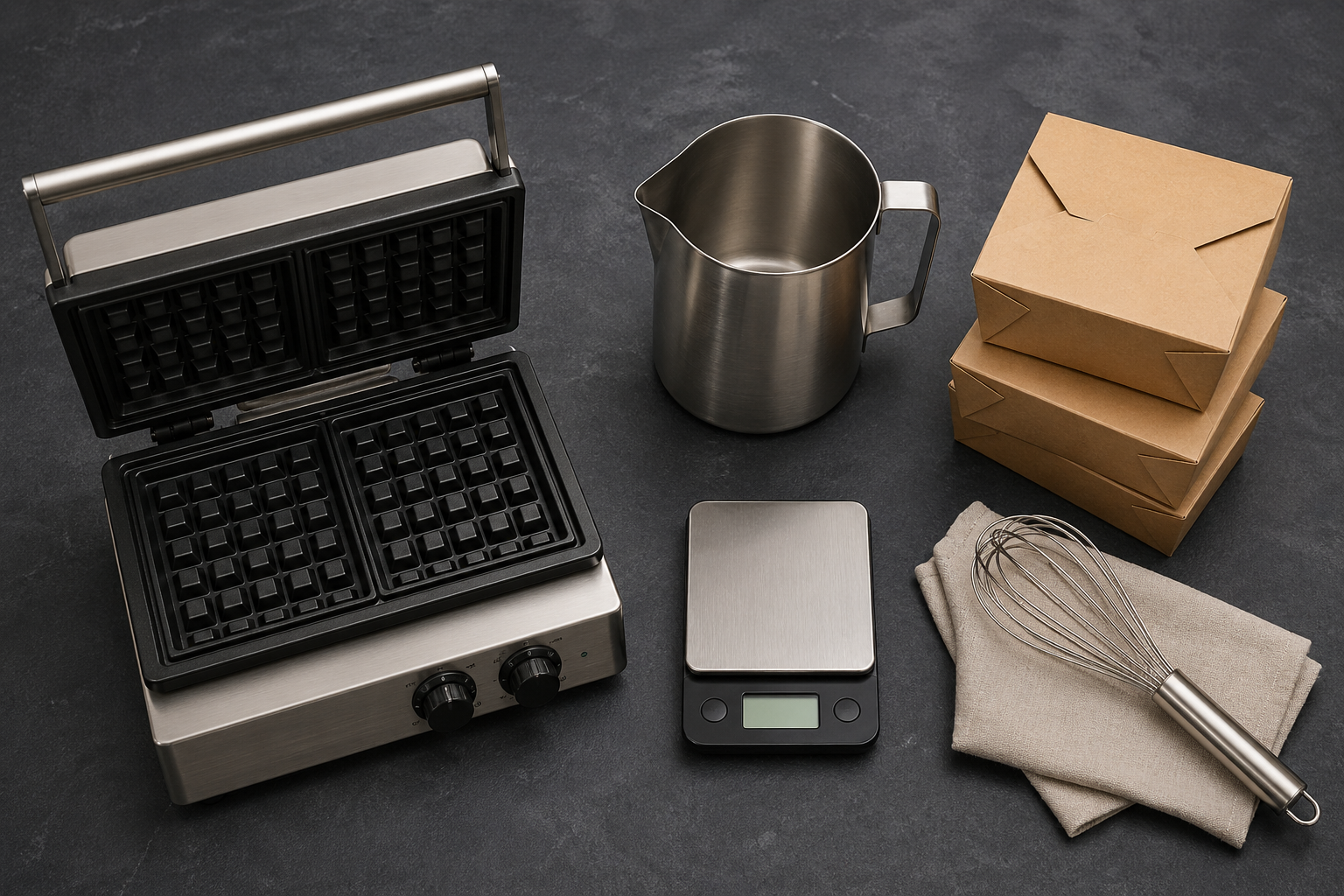
Equipment is the second-largest startup expense after rent — or the largest if you’re running a home-based or mobile operation. The temptation is to buy everything commercial-grade from day one. Resist it. Buy what you need now and upgrade as revenue justifies it.
Essential equipment for any waffle business:
- Commercial waffle iron ($150 – $800): This is non-negotiable. A double-grid rotating iron produces the most consistent results. Brands like Waring and Krampouz are workhorses. Avoid cheap residential models — they can’t handle volume and they break within months of commercial use.
- Refrigeration ($300 – $2,000): A commercial-grade undercounter refrigerator is sufficient for a small operation. You need reliable cold storage for batter, dairy, and fresh toppings.
- Prep station / work table ($100 – $500): Stainless steel. No wood. Easy to sanitize, durable, and required by most health codes.
- Batter dispenser or pitcher ($20 – $80): Sounds minor, but consistent portioning is what separates a profitable operation from one that bleeds money through waste.
- POS system ($0 – $100/month): Square, Toast, or Clover. All three work well for small food businesses. Square’s free tier is perfectly adequate when you’re starting out.
- Smallwares ($200 – $500): Mixing bowls, whisks, spatulas, tongs, portion cups, napkin dispensers. Budget roughly $300 and you’ll cover everything.
Equipment you do NOT need on day one:
Soft-serve machines, display cases, custom signage packages, and industrial mixers. These are upgrades you earn after your first 6 months of consistent revenue. Buying them upfront is how people burn through their startup capital before they serve their 100th waffle.
How to Start a Waffle Business With the Right Legal Foundation
Every country and municipality has different requirements, but the fundamentals are universal. Skip any of these and you risk fines, shutdowns, or worse — a food safety incident that kills your reputation before it starts. If you’re operating in the United States, the FDA’s food business startup page is the definitive starting point for federal requirements.
Business registration: Register as a sole proprietorship, LLC, or equivalent entity in your jurisdiction. An LLC is the strongest choice for most small food businesses because it separates your personal assets from business liabilities.
Food handler’s permit: Required in virtually every market. The certification process typically involves a short course (4–8 hours) covering safe food handling, temperature control, allergen management, and hygiene standards. Cost: $10 – $50 in most regions.
Health department inspection: Your kitchen — whether home-based or commercial — must pass inspection. Inspectors look for proper handwashing stations, adequate refrigeration, pest control measures, food-safe surfaces, and correct waste disposal. Schedule your inspection early. Delays here can push your launch date back by weeks.
Business insurance: General liability insurance for a small food business runs $300 – $1,000 per year. If you’re operating a food cart or attending events, you’ll also need a vendor’s policy. Some event organizers require proof of insurance before they’ll give you a spot.
Permits for specific models:
- Food carts and pop-ups often require a mobile vendor’s license and event-specific permits
- Storefronts need a certificate of occupancy and may require a sign permit
- Home-based operations may need a cottage food license (rules vary significantly — some regions limit annual revenue, others restrict the types of food you can sell)
Design a Menu That Sells Without Overwhelming You
The biggest mistake new waffle businesses make is offering too many items. A bloated menu increases your ingredient costs, complicates your prep routine, slows down service, and confuses customers.
Start with 4 to 6 waffle options across three tiers. That’s it.
Recommended menu structure:
Signature waffles (2–3 options): These are your identity. The items people photograph, share on social media, and come back for. One should be indulgent (think: Nutella, strawberries, and whipped cream). One should be distinctive — something they can’t easily get elsewhere (matcha white chocolate, lemon curd with torched meringue, or a savory option like fried chicken and maple).
Classic waffles (1–2 options): Butter and syrup. Powdered sugar. Simple, fast, and cheap to produce. These keep the line moving and appeal to customers who want something familiar.
Seasonal or limited-time offering (1 option): Rotate this monthly or quarterly. Pumpkin spice in autumn. Berry compote in summer. S’mores in winter. Limited-time items create urgency and give returning customers a reason to come back.
Drinks (2–4 options): Coffee, fresh juice, or a signature lemonade. Drinks carry enormous margins (often 80%+) and increase average ticket size by $2–$4 per customer. Don’t overlook this.
Keep your printed menu clean and visual. One high-quality photo per item. No walls of text. Customers should be able to decide what they want in under 15 seconds.
Price Your Waffles for Profit, Not Just Sales
Pricing is where emotion meets math, and math needs to win. Too many new food businesses price based on what “feels right” or what competitors charge. Both approaches are flawed.
Use this formula instead:
Target price = Food cost ÷ 0.30
This means your food cost should be roughly 30% of your selling price. If a waffle costs you $1.50 to produce (including toppings and packaging), your minimum price should be $5.00.
But that’s the floor, not the target. Factor in:
- Location premium: High-traffic tourist areas and shopping centers can support 20–40% higher prices
- Perceived value: Presentation, packaging, and branding all influence what people will pay. A waffle served on a wooden board with a dusted sugar finish sells for more than the same waffle on a paper plate
- Topping economics: Offer a base waffle at a lower price and let customers build up with paid toppings. This upsell model is proven across the food industry and typically increases average ticket size by 30–50%
Sample pricing strategy:
| Item | Food Cost | Suggested Price | Gross Margin |
|---|---|---|---|
| Classic waffle (butter + syrup) | $0.65 | $4.50 | 85% |
| Signature waffle (Nutella + berries) | $1.40 | $6.50 | 78% |
| Premium waffle (ice cream + caramel) | $2.00 | $8.00 | 75% |
| Fresh coffee (12oz) | $0.35 | $3.00 | 88% |
| Combo (waffle + drink) | $1.80 | $8.50 | 79% |
Build a Brand That People Remember

Your waffles are a product. Your brand is why people choose your waffles over someone else’s. And in a market where the entry barrier is low — anyone can buy a waffle iron — brand is your only real moat.
Name: Short, easy to spell, easy to say in any language. Avoid puns that only work in one culture. Test it by asking five people to spell it after hearing it once. If more than one person gets it wrong, pick a different name.
Visual identity: Invest $200–$500 in a clean logo and a consistent color palette. Use it on everything — your packaging, your social media, your menu board, your apron. Canva is a perfectly acceptable starting point. You don’t need a $5,000 branding agency on day one.
Packaging: This is your silent salesperson. Branded boxes or wrapping paper with your logo turn every takeaway order into a walking advertisement. Custom packaging costs $0.15–$0.50 per unit at scale. Worth every cent.
Photography: Your phone camera is good enough if the lighting is natural. Shoot near a window during golden hour. Overhead angles work best for waffles. Never use stock photos. Customers can tell, and it erodes trust instantly.
Market Without a Big Budget
Paid advertising is optional when you’re starting out. Organic reach is still alive and well in the food space — if you know where to focus.
Instagram and TikTok: These are your primary channels. Post 3–5 times per week. Show the process — batter pouring, irons closing, toppings being layered. Short-form video content outperforms static images by a significant margin. You don’t need professional editing. A steady hand, good lighting, and the sizzle sound of a waffle iron are enough.
Google Business Profile: Set this up on day one. A complete profile with photos, hours, menu, and reviews is the single most effective way to appear in local searches. Encourage every satisfied customer to leave a review. Respond to every single one.
Delivery platforms: Listing on Uber Eats, DoorDash, or regional equivalents gives you immediate access to thousands of potential customers. The commission (typically 15–30%) cuts into your margin, but the volume and visibility often justify it during your first year.
Local partnerships: Approach coffee shops, coworking spaces, and gyms about cross-promotions or wholesale supply. A nearby café that doesn’t serve food might welcome a waffle collaboration. These partnerships cost nothing and build your customer base through trusted recommendations.
Launch event: Offer your first 50 waffles free (or at a deep discount) on opening day. The cost is minimal — under $100 in ingredients — and the social media content and word-of-mouth you generate far outweigh it.
Know Your Numbers From Day One
Most small food businesses fail not because the food is bad, but because the owner doesn’t track the right numbers. Here are the metrics that matter:
Daily sales volume: How many waffles are you selling per day? Track this from day one. You need a minimum volume to cover your fixed costs, and knowing that number tells you whether your location, hours, or marketing need adjustment.
Food cost percentage: Total ingredient spend divided by total revenue. Keep this below 30%. If it creeps above 35%, you’re either over-portioning, wasting ingredients, or underpricing.
Average ticket size: Total revenue divided by number of transactions. If this number is below $6, you need better upselling — combos, drinks, premium toppings.
Customer acquisition cost: How much are you spending (in marketing, discounts, or platform commissions) to get each new customer? For a waffle business, this should stay below $3 per new customer.
Break-even point: The number of waffles you need to sell per month to cover all fixed and variable costs. Here’s a simplified example:
| Monthly Fixed Costs | Amount |
|---|---|
| Rent / commissary fee | $1,500 |
| Insurance | $80 |
| POS and software | $50 |
| Marketing | $200 |
| Utilities | $150 |
| Miscellaneous | $100 |
| Total fixed costs | $2,080 |
If your average waffle sells for $6.00 with a food cost of $1.50, your gross profit per waffle is $4.50. Divide $2,080 by $4.50 and you need to sell roughly 463 waffles per month — about 15 per day — just to break even. Everything above that is profit.
Mistakes That Kill Waffle Businesses in the First Year

Knowing what to do matters. Knowing what not to do might matter more.
Overbuilding before validating demand. Signing a 3-year lease and spending $80,000 on a build-out before you’ve sold your first 1,000 waffles is gambling, not entrepreneurship. Start small. Prove the concept. Then invest.
Ignoring food waste. Waffle batter has a limited shelf life — typically 24 to 48 hours when refrigerated. Prepping too much batter means throwing money away. Track your daily sales and prep accordingly. A simple spreadsheet that logs daily production vs. daily sales will save you hundreds of dollars per month.
Underestimating the power of speed. In a grab-and-go environment, customers expect their waffle within 3–5 minutes. If you’re consistently slower than that, you’re losing walk-up customers who see the line and keep walking. Workflow design matters. Your iron, toppings station, and packaging should be within arm’s reach of each other.
Neglecting consistency. The waffle a customer gets on their third visit should taste exactly like the one they got on their first. Standardize your recipes with precise measurements. Use timers on your irons. Train every person who touches the batter.
Skipping the soft launch. Open quietly for 1–2 weeks before your “grand opening.” Use the soft launch to work out operational kinks, test your timing, and build initial reviews. Your grand opening should showcase a business that already runs smoothly — not one that’s figuring things out in real time.
A Realistic Timeline From Idea to First Sale
Here’s what the journey actually looks like when you strip away the motivational fluff:
| Phase | Duration | Key Actions |
|---|---|---|
| Research and planning | 2 – 4 weeks | Choose model, research local regulations, scout locations or platforms |
| Legal setup | 1 – 3 weeks | Register business, get permits, arrange insurance |
| Equipment and supplies | 1 – 2 weeks | Purchase equipment, source ingredients, set up kitchen |
| Recipe testing | 2 – 3 weeks | Finalize recipes, standardize portions, test with small groups |
| Branding and marketing setup | 1 – 2 weeks | Logo, social media accounts, Google Business Profile, packaging |
| Soft launch | 1 – 2 weeks | Limited hours, friends and family, collect feedback |
| Grand opening | 1 day | Full launch with promotion |
| Total | 8 – 16 weeks | From zero to serving customers |
For a home-based or food cart model, you can realistically compress this to 6–8 weeks. A full storefront with build-out will take 4–6 months.
The Bottom Line
A waffle business is one of the most accessible entry points in the food industry. The raw ingredient cost is low, the margins are strong, and the product has universal appeal across cultures and age groups. But accessible doesn’t mean easy. The businesses that survive their first year are the ones that treat it like a real operation from day one — tracking numbers, controlling waste, building a brand, and resisting the urge to scale before the foundation is solid.
Start with the smallest viable version of your concept. Sell your first 500 waffles. Learn what your customers actually want (not what you assume they want). Then — and only then — invest in growth.
If you’re exploring other business ideas beyond waffles, check out our business hub for more hands-on guides.
The waffle iron heats up fast. Your business doesn’t have to.